




Git tracks code. Rift tracks the AI work behind it. We're launching the system of record for AI-assisted engineering — Join the waitlist for early access.
DORA-for-AI, in one dashboard. Cost per PR, model ROI, accepted-output rate, AI rework — the metrics your CTO is being asked for in every board meeting.
1const server = Bun.serve({2 port: 3000,3 fetch(req) {4 return new Response('Hello from Bun')5 },6})Forecast every dollar before the budget meeting.
Monte Carlo over your trailing 90 days of warehouse data. Real-time scenarios with P10/P50/P90 ranges your CFO will accept — built for the conversation you're already having with finance.
Cost forecasts your CFO will accept.
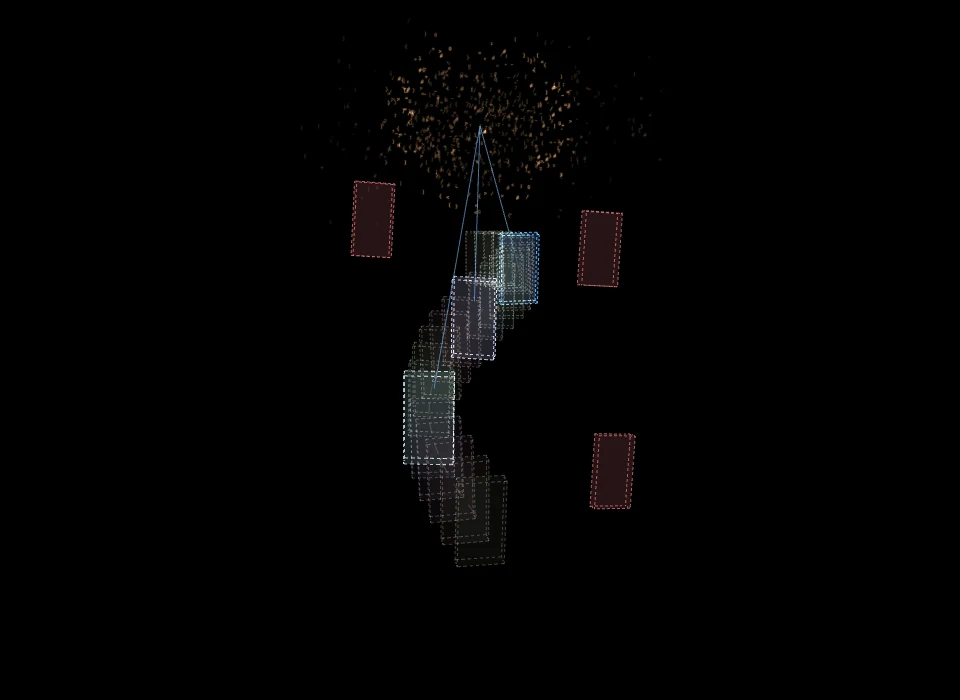
Token volume per (model, task type), team-level adoption rates, seasonality, and price tables — every variable distributed and resampled 10,000 times. Out the other end: P10, P50, P90 ranges decomposed by model, team, and repo, with a tornado chart showing which inputs move the forecast most.
View scenariosModel the rollout before you commit.
What if you add Cursor to 80 backend engineers? Move test generation from frontier to mid-tier? Cut headcount by N while bumping AI usage 35%? Real-time side-by-side scenarios with sensitivity analysis. The product makes the tradeoff visible — staffing decisions stay with you.
Tamper-evident by design. Every AI session captured Git-natively, redacted before storage, and signed onto its own branch — so your audit trail is the same artifact your code already trusts.
Built for the questions leadership is already being asked.
Defend the spend. Govern the rollout. Forecast next quarter — without a daemon, a proxy, or a vendor in the data path.
Forecasting
Monte Carlo cost forecasts with P10/P50/P90 ranges. Model next quarter before the budget meeting, not after.
Reconciliation
Token-accurate cost attribution down to the PR, reconciled against OpenAI, Anthropic, and provider admin APIs in the background.
Risk & Review
Per-PR risk scoring routes high-impact AI work to senior reviewers and flags sensitive paths before they merge.
Identity Graph
Stitches SSO, Git, GitHub, Jira, and provider workspaces into a single confidence-scored view of who did what.
Governance
Two-pass redaction enforced at compile time. Customer-managed keys. SOC 2-aligned controls. Audit logs that survive squash and rebase.
Capture is local. Encryption is end-to-end. The substrate is yours. Tamper-evident provenance, customer-managed keys, and SOC 2-aligned controls from day one. Join the waitlist to ship with us at GA.
Frequently
Asked
Questions
Does Rift ever see my source code?
No. Capture runs entirely on your machine. Rift is a short-lived binary that fires on Git and agent hook events, redacts the payload through a two-pass pipeline, and writes only redacted metadata to a dedicated Git branch — never raw source.
A RedactedBytes Go wrapper makes it a compile error to write un-redacted bytes into anything that syncs. Raw transcripts stay local by default; customer-managed encryption keys are available on Enterprise.
Which AI assistants does Rift support?
First-party at launch: Claude Code, Codex, Cursor, GitHub Copilot CLI, Gemini CLI, OpenCode, and Factory Droid. Each integration translates the assistant's native hook lifecycle into Rift's canonical event types.
Anything else plugs in via the plugin protocol — drop a rift-agent-<name> binary on your $PATH and Rift discovers it. Internal agents, custom gateways, and experimental tools all fit the same shape.
Do I need a daemon, a proxy, or to change my workflow?
None of the above. There's no long-running process, no MCP server, no proxy between you and your assistant. Hooks fire, Rift updates state and exits — short-lived subprocesses that survive crashes and never block your main flow.
Local capture targets sub-100ms p50, sub-500ms p95. Slow paths (Cloud sync, AI summarisation, provider reconciliation) run asynchronously after the commit completes. Your developer experience is unchanged.
How is Rift priced?
Per seat, not per token. Engineering orgs budget by headcount — token-based pricing creates exactly the anxiety the product is supposed to solve.
- Free. CLI plus personal Cloud — forever, for individual developers and OSS projects.
- Team. Org analytics: PR cards, cost-per-PR, model ROI, provider reconciliation, Slack and Teams digests.
- Business. Adds forecasting, scenario builder, multi-provider reconciliation, SSO, FinOps exports.
- Enterprise. Customer-managed keys, on-prem control plane, SCIM, audit log exports, sensitive-repo policies.
What about security and compliance?
Tamper-evident hash-chained event logs. Compile-time-enforced redaction. Customer-managed keys on Enterprise. SOC 2-aligned controls from day one, with Type II in flight (Type I within 9 months of GA). GDPR-ready at launch with optional EU data residency. ISO 27001 within 24 months. HIPAA roadmap.
Anti-surveillance is product policy: per-developer drilldown is policy-gated and access-logged, manager dashboards default to team-level aggregates, and ranking metrics are deliberately not shipped. Engineering buyers reject surveillance tools — we built the opposite on purpose.